
What Does It Mean to Be Made in the Image of God?
I was asked the other day, “What does it mean to be made in the image of God?” I gave the standard answer: intellect, emotions, and will. During the conversation, we added morality. I added being created to love God. By the time we were done, the definition had become messy, fragmented, and, honestly, based on my current understanding, flawed.
Not entirely wrong. Just incomplete.
The more I thought about it, the more I realized those categories sound more like philosophical compartments than the living picture Scripture actually presents. They describe functions of man, but not the purpose of man. The Bible speaks about humanity far more holistically than many of our modern definitions do.
If I could answer that question again, this is how I would answer:
“To be made in the image of God is to be created to know truth, love rightly, and choose morally in order to faithfully represent God within creation. Through Christ, His adopted children are being restored to that purpose.”
That definition is not merely about mental abilities. It is about relationship, purpose, stewardship, morality, and the proper ordering of human existence under God.
The image of God is not simply intelligence.
Artificial intelligence can process information. That alone does not make something human. Humanity was created with the capacity to recognize meaning, moral reality, beauty, truth, love, and responsibility. We were created not merely to think, but to understand and live rightly.
The traditional categories are not entirely useless, but I believe they need refinement.
A more biblical framework may look something like this:
- Rational Understanding — the capacity to recognize truth, reason, wisdom, and meaning.
- Agape — the capacity for self-giving covenant love toward God and others.
- Moral Will — the capacity to choose and act according to truth and rightly ordered love.
Truth rightly understood forms rightly ordered love, which then produces righteous action.
That pattern appears throughout Scripture.
Sin corrupts all three:
- the mind becomes darkened,
- love becomes disordered,
- the moral will becomes rebellious.
Redemption restores all three through Christ and the work of the Holy Spirit.
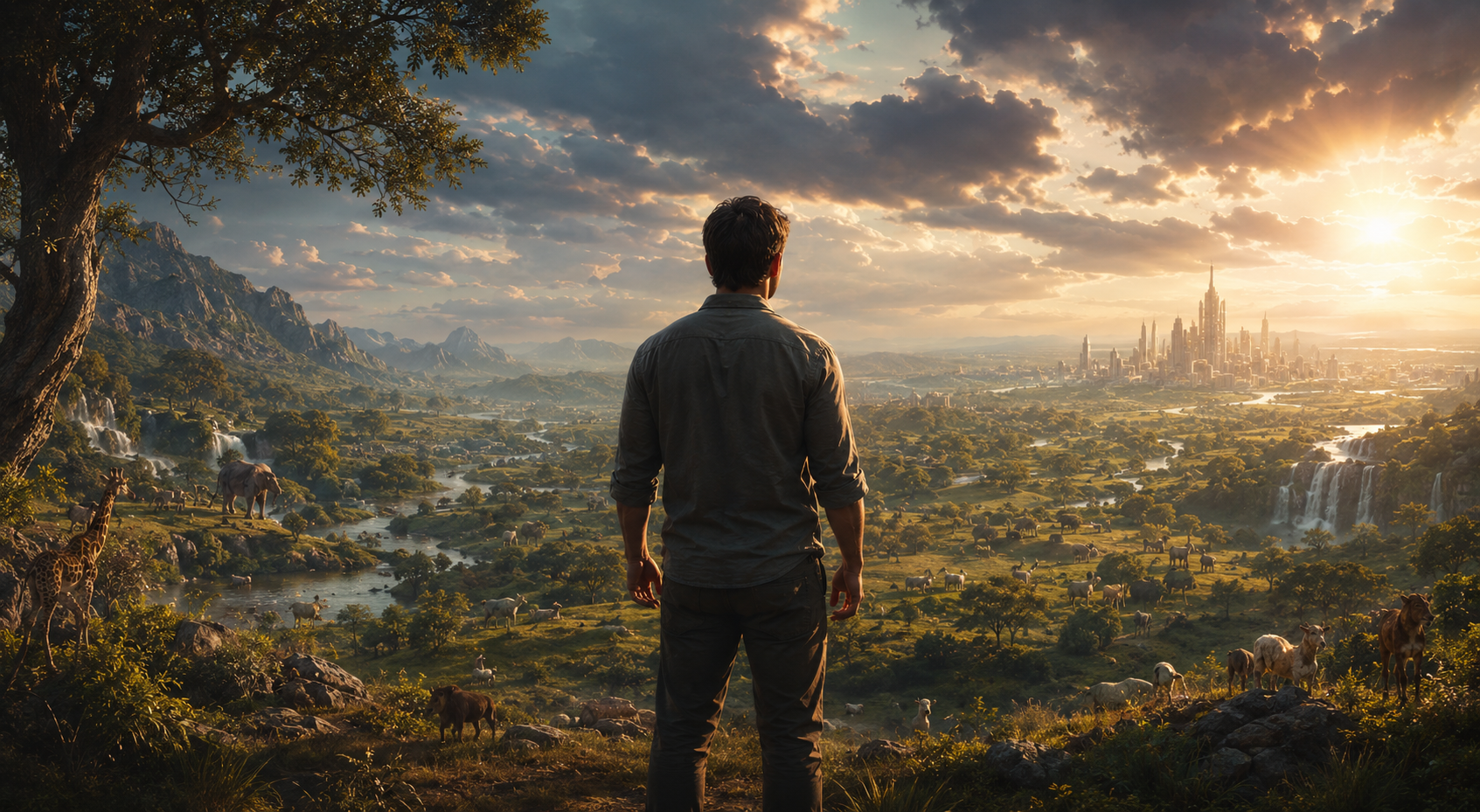
This also explains why Genesis immediately connects the image of God with dominion.
“Then God said, ‘Let us make man in our image, after our likeness. And let them have dominion…’” — Genesis 1:26 (ESV)
The image was never separated from its purpose.
Humanity was created to represent God faithfully within creation through stewardship, creativity, relationship, wisdom, and love. We were meant to cultivate reality under the authority of God. The Fall corrupted that calling, but redemption restores it rather than abolishing it.
That is why the Bible ends not with the destruction of creation, but with renewed creation.
Many Christians unintentionally imagine eternity as an endless existence somewhere outside reality. But Scripture ends with resurrection, a renewed Earth, God dwelling with humanity, and the curse removed. The story of the Bible is not an escape from creation. It is the restoration of creation under the reign of Christ.
The redeemed human is not less human than Adam.
The redeemed human becomes fully human as intended through Christ.
The image of God is truth, love, moral responsibility, and faithful stewardship brought into harmony under God.