
About the Author
My name is Matthew, and I’ve been a follower of Jesus for over sixty years. I’ve served in churches as a worship leader, youth worker, elder, and more. That might sound like I always had things figured out. I didn’t.
The truth is, much of my early faith was stitched together from fragments—sermons, slogans, traditions, and good intentions. But it lacked something essential: depth. Understanding. Conviction rooted in reality.
Then one night, I reached the end of that surface-level faith and cried out,
“God, I just want to know the truth.”
That simple prayer didn’t fix me overnight. But it did something better—it set my feet on a new ”. path. A long trail of unlearning, rebuilding, wrestling, growing, and slowly being transformed by grace and truth.
That’s the journey I’m still on. And that’s the journey I’m inviting you into.
I’m not a pastor or professor. I’m a disciple. A fellow traveler. And I believe the expedition ahead is worth walking—especially if we walk it together.
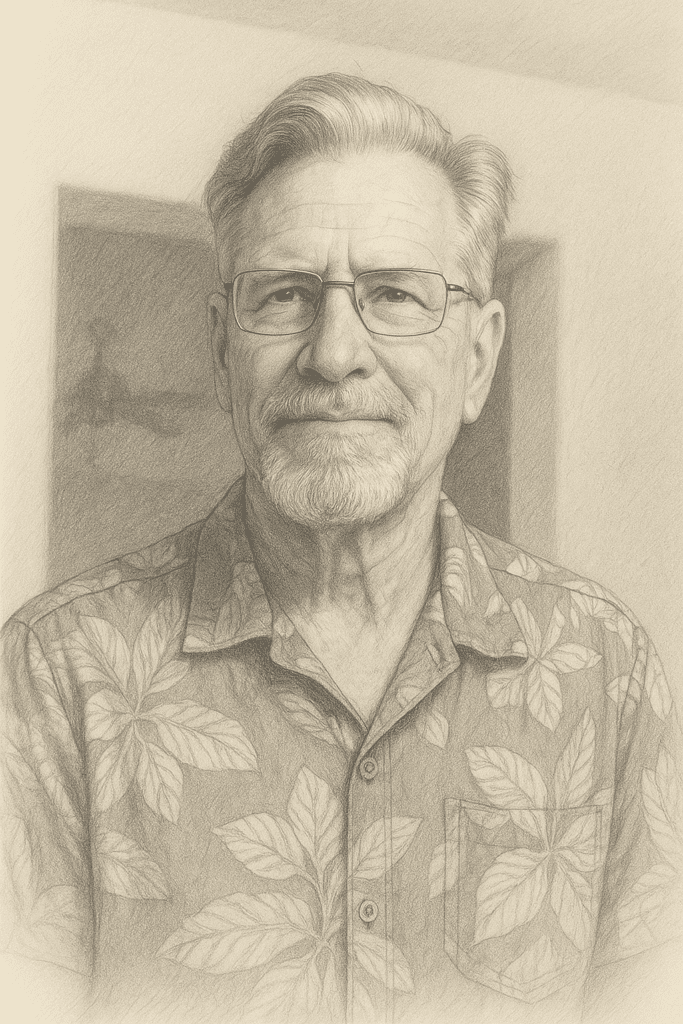
My Testimony — Grace Before I Knew Its Name
The first defining fact of my life is that I was adopted.
I don’t remember being told. I’ve always known. My parents never hid it. They would say things like, “We chose you. We wanted you.”
As a child, that didn’t land with any emotional weight. I was their son. How I got there didn’t feel important. Adoption didn’t register as loss or gain. Their explanation even felt slightly unnecessary to me, don’t all parents choose their children? You have a child, you raise them, you love them. You could choose otherwise, but most don’t.
At the time, adoption felt like background information.
It would take most of my life for that truth to finally make sense.
A Christian Home and a Faith I Inherited Before I Understood It
My parents were Christians, active, committed, deeply involved in their evangelical church. If the doors were open, we were there. My father served most of my life as a deacon. My mother was the Sunday school secretary for as long as I can remember.
Church was normal. Sunday school was normal. Scripture was familiar. I learned the language of faith early, long before I understood the weight of it.
A few days before my ninth birthday, during a Sunday service, something happened that divided my life in two.
The service was ending. We were standing. The pastor was doing what evangelical pastors often do, pressing people to come forward, urging decisions, calling for response. What we usually call an altar call.
I wasn’t paying attention. I was thinking about getting out of there. About riding my bike. About my real life starting again once church was over.
Then, over my right shoulder, I heard a voice say, “Follow me.”
I didn’t turn around. I didn’t look at my parents. I didn’t question whether anyone else heard it. I simply acted.
That was the moment I entered into a relationship with Jesus Christ, not because I reasoned it out, but because I responded to a call.
At the time, I didn’t analyze what happened. Looking back now, I understand it more clearly. The voice was not audible in the ordinary sense. It was internal, but it was not my internal dialogue. It was the Holy Spirit. Christ Himself. A supernatural call.
It sounded as though it came from over my right shoulder. That detail mattered, not because of direction, but because of realness. Even if it occurred “in my head,” it was received, not generated. That is why it has never faded.
A few days later, I met with the pastor and my parents. On May 3rd, two days after my ninth birthday, I was baptized.
I continued living my life, now as someone who had been called by God, even though I had no language yet for what that meant.
Early Protection, Early Restraint, and Grace I Didn’t Recognize
Around that same time, I nearly drowned.
I was nine years old. I survived, not by skill, not by foresight, but by what I can only now describe as grace. At the time, it was just something that happened. Looking back, it was one of the earliest clear moments where my life could have ended, and didn’t.
A few months later, we moved to Arizona.
Within less than a year, before and just after that move, I encountered my first serious opportunities to sin. I didn’t go looking for them. They were presented to me. Three occasions. Same nature. Same pattern.
I participated. I didn’t know what to do with it. I didn’t yet feel crushed by guilt or defined by it, but something shifted. For the first time I can remember, I sensed opposition.
Looking back now, I would say plainly that Satan was actively working against me.
At the same time, something else was happening that I could not see then. There were other opportunities I wanted to pursue as I grew into my teenage years, and God simply did not allow them. Doors closed. Circumstances changed. Restraint was placed on my life without my understanding or consent.
I was not the “good Christian boy.” But God prevented me from becoming someone I would now deeply regret.
That was grace, long before I knew to call it that.
A Life Full of Church Activity—and an Unnamed Absence
I kept doing church.
Sunday school. Youth group. Mission trips. We painted a church on the Navajo reservation. In my early twenties, I became a youth leader. Later, I became minister of music, leading choir, congregational singing, teaching occasionally.
I got married. Had children. Stayed active. Stayed involved.
From the outside, my life looked faithful. Inside, I knew something was missing.
I knew I was not what Scripture described as a disciple. I knew I did not love God with all my heart, soul, mind, and strength. I knew I wasn’t compelled to share what I believed with others, not naturally, not joyfully.
The friends who knew me as a child didn’t see a radical difference in me as an adult. At least not the kind of difference Scripture talks about.
I was trying. And I was failing.
Years later, I would understand that trying was part of the problem.
Sixteen Years Under One Pastor—and the Limits of Inherited Faith
From age ten to twenty-six, I sat under the same pastor.
He was deeply evangelical, hellfire, brimstone, constant altar calls. The mission was clear: win souls. Our role was simple, get people to church so the pastor could tell them about salvation.
We believed that was obedience. We believed that was discipleship.
It wasn’t.
After sixteen years, that pastor left. A new one arrived, my age, fresh out of seminary. His preaching was different. He wasn’t trying to pressure decisions. He was trying to help people grow in relationship with God while he himself was growing.
From him, I learned something humbling. I didn’t know nearly as much as I thought I did.
Around that same time, an older man in the church, thirty years my senior, began meeting with me weekly. We talked. We studied. We learned together.
It felt like starting over. Not as a newborn, but as someone finally realizing how much growing was still ahead.
God’s Use of Men When the Church Felt Thin
After the passing of my friend and mentor Bob, God did not leave a vacuum.
He led me to another man, John. We met regularly. We walked together. We challenged each other. We sharpened each other.
John and I were kindred disciples. We traveled together, helped each other, carried one another when faith felt heavy.
Looking back, the point was never the men themselves.
Bob. John. And another who came later.
They were overt acts of God.
When traditional church structures felt thin, incomplete, or insufficient, God supplied what was needed through relationship. Not programs. Not positions. People.
Each man arrived at the right time. Each stayed as long as necessary. Each disappeared when their role was complete.
That pattern is not accidental. It is shepherding.
Grace Made Visible in Marriage
The same is true of my marriage.
My wife and I, left to ourselves, would never have found each other. The timing. The circumstances. The convergence. None of it makes sense apart from divine intervention.
There are countless moments in our lives that Debbie and I often consider, moments where coincidence simply fails as an explanation. Doors opened. Paths crossed. Obstacles moved. Decisions aligned that should not have.
We did not orchestrate those moments. God did. We simply followed the path laid before us.
Over time, we have come to see our life together not as something we achieved, but something we were given. Grace did not just save us. Grace arranged us.
I am convinced of this now, not emotionally, but soberly.
I am not the person I wanted to be.
I am the person God wanted.
Still Serving, Still Seeking, Still Not There Yet
I continued serving wherever I was. Choirs. Teaching. Youth leadership again. Elder. Occasional preaching. My wife and I served at a mission. We loved God. We wanted to serve Him.
But even then, I didn’t understand what it truly meant to love God.
I didn’t grasp why loving God and loving others was the greatest commandment, or why everything depended on it.
That understanding had not yet arrived.
“God, I Just Want to Know the Truth”
One night, still live a different life than I knew God wanted, I sitting on my couch, frustrated and exhausted, I said out loud:
“God, all I want is the truth.
I just want to know the truth.
If You’re there at the end of that search, I hope so.
But either the Bible is wrong, or I’m wrong. Something is wrong.”
That was not a crisis of faith.
It was the beginning of clarity.
Within a few years, through the then-new medium of podcasts, I went searching for solid Christian teaching. I found apologetics. I found careful reasoning. I found faith that did not fear questions.
For the first time, I saw clearly that God could be known not only through Scripture, but through reality itself, creation confirming the Word.
That lit a fire.
I studied. I wrote. I organized. I tried to assemble everything into something coherent.
Then one day, I gathered all my notes, folders, papers, outlines, and burned them in the barbecue.
Not out of despair. Not to erase the past.
As a symbol.
I realized I had been trying to figure God out on my own terms. I needed to start over, again.
God’s Hand Everywhere—Even When I Didn’t Ask
At 59, we moved to Oklahoma. I joined another evangelical church. This pastor taught Scripture carefully and exegetically. I had more time to study than I ever had before.
In a Sunday school class, I noticed a man newer in the faith, older than me, full of questions, hesitant to ask them publicly. I felt prompted to invite him to meet.
We met weekly for nearly a year.
For the first time, teaching flowed naturally, not from position, but from relationship.
Later, we moved back to Arizona.
As I look back now, not just on church life, but on my business, our moves, the timing of events, I see the hand of God everywhere.
I didn’t pray dramatic prayers.
I didn’t demand signs.
I simply moved forward with what little I knew.
And only now do I realize, He was guiding me the entire time.
Adoption, Finally Understood
Only after my love for God became real did adoption finally make sense.
Spiritually, adoption means being chosen, not naturally born into the family, but brought in by grace.
I now understand that my life with God exists only because He chose to adopt me. He called me. He restrained me. He preserved me. He sustained me.
I am here by grace.
I remain by grace.
I have a future by grace.
Everything I once thought was coincidence now looks like care.
Transformation, Not Effort
Scripture commands us to love God, but it never tells us how to manufacture that love. Because we can’t.
Over time, God burned away my self-effort, my control, my attempts to make growth happen.
When we sold our business and stepped away, I finally had space to study, write, and listen.
The truth became real, not theoretical. And love followed.
Like falling in love with a person, you don’t ration time. You want to be present. You want to know them. You want more.
That is what my relationship with Christ became.
Not because I forced it.
Because God made it real.
Why I’m Still Writing—and Why DiscipleLife Exists
I’m 65 now. And I’m more aware than ever of how much I still don’t know.
The more I learn, the more there is to learn.
The more I love, the more love there is to give and receive.
I don’t do what I’m doing now because I concluded it’s the right thing to do.
I do it because I can’t imagine doing anything else.
Writing these essays.
Laying out the path.
Helping others see clearly.
Not to save anyone.
Not to manufacture growth.
But to make truth available, so those God is calling don’t have to wander in the fog as long as I did.
God can take a moment, a year, or decades. The thief on the cross knew almost nothing, and it was enough. Most of us take longer, much longer.
If I can help make the path clearer, then every year, including the confused ones, has been worth it.
That is my life.
That is my testimony.
And that is why DiscipleLife exists.
Mission Statement – A Disciple’s Life
Everyone wrestles with questions of purpose.
At the core of our human experience is the desire to know why we’re here.
What can we expect from life?
Is there a reason we exist?Why do we feel a constant pull toward meaning—like something vital is missing?
I believe that ache is real. We were meant to want more than survival or success.
So we search.
But here’s the problem:
There are two kinds of meaning that can satisfy us—one that we want and one that is true.
We can chase subjective meaning, crafting a life that feels fulfilling on our own terms.
Or we can surrender to the objective meaning given by our Creator.
I do believe there are many meaningful ways to live.
But only a life rooted in how we were designed to live—centered on our Creator’s purpose—can be called the highest good.
The summum bonum of human existence.
A Disciple’s Life is about that journey.
It’s about asking the fundamental questions.
It’s about discovering the truth of who we are and why we’re here.
It’s about learning to live in the light of those answers—not just intellectually, but practically, daily, and relationally.
And most of all, it’s about being transformed—not by trying harder,
but by walking with the One who made us.